

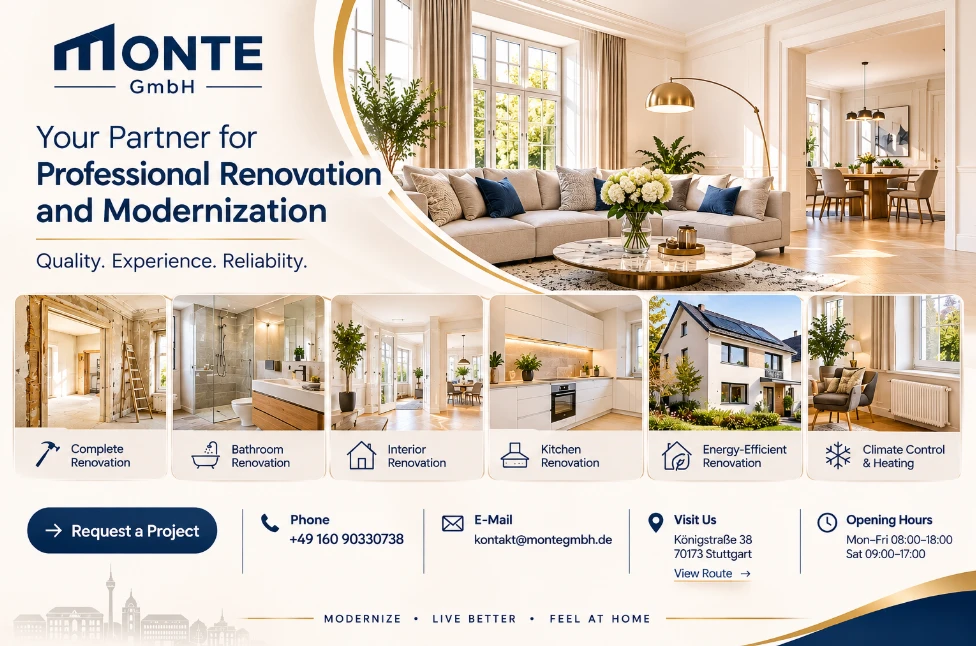
The interior of a property has a major influence on how comfortable and enjoyable it is to live or work there. Outdated wall finishes, worn flooring, inefficient room layouts and insufficient lighting can make even a spacious property feel uncomfortable. A carefully planned interior renovation can completely change the atmosphere of a building while improving its functionality and long-term value.
In Stuttgart, Germany, property owners have many different renovation requirements. Some want to modernize an older apartment, while others are preparing a family house for a new stage of life or improving a rental property. Regardless of the project's size, successful renovation requires a combination of thoughtful design, suitable materials and professional execution.
A well-organized Interior Renovation Stuttgart project focuses on creating spaces that are not only visually attractive but also practical for everyday use. The right approach can help homeowners make better use of available space, improve the appearance of their interiors and adapt their properties to modern living standards.
Why Is Interior Renovation Important?
Interior finishes and room layouts naturally become outdated over time. Daily use can damage floors, walls and ceilings, while changing lifestyle requirements may make existing room arrangements less practical.
Renovation provides an opportunity to address these issues and improve the overall quality of the interior.
Some of the main benefits include:
- Improved appearance: New wall finishes, flooring and interior details create a fresh and contemporary atmosphere.
- Better space utilization: A revised layout can make rooms more functional and comfortable.
- Increased property value: Modern interiors can improve the appeal of a residential or rental property.
- Greater comfort: Better lighting, suitable materials and thoughtful design improve everyday living.
- Easier maintenance: Modern surfaces and durable materials can simplify cleaning and reduce maintenance requirements.
Before starting, property owners should identify which improvements are most important and establish a clear renovation concept.
Wall and Ceiling Renovation: The Foundation of a Modern Interior
Walls and ceilings cover large areas of every room, so their condition has a considerable impact on the overall appearance of a property.
Cracked plaster, damaged wallpaper, uneven surfaces and outdated colours can make interiors look neglected.
Depending on the existing condition, renovation work may include removing old wall coverings, repairing damaged plaster, preparing surfaces, applying new paint and installing modern decorative finishes.
Ceilings should also be considered. In some properties, suspended ceiling systems or drywall constructions can help improve the appearance of rooms and create possibilities for integrated lighting.
When selecting colours and finishes, it is important to consider the amount of natural light, room size and existing furniture.
Light colours can make smaller rooms appear more spacious, while carefully selected accent colours can create visual interest without overwhelming the interior.
Choosing the Right Flooring for Your Property
Flooring is one of the most heavily used elements of an interior. It must withstand everyday wear while complementing the overall design.
There are several popular options for residential renovation projects.
Laminate flooring offers a wide range of decorative finishes and can be a practical choice for many living spaces.
Engineered wood flooring creates a natural appearance and can add warmth to bedrooms and living rooms.
Vinyl flooring is available in many designs and is valued for its practical maintenance characteristics. The appropriate product should be selected according to the intended room and installation requirements.
Ceramic and porcelain tiles are particularly suitable for areas where moisture resistance and easy cleaning are important, such as kitchens and bathrooms.
Before installing new flooring, the existing subfloor must be inspected. Uneven surfaces, moisture problems and damaged screed may require preparation or repair.
Choosing suitable flooring from the beginning helps prevent unnecessary maintenance and replacement costs later.
Modern Room Layouts and Better Use of Space
One of the most important goals of interior renovation is improving how available space is used.
Older properties sometimes have room layouts that do not correspond to modern living habits. Separate small rooms, poorly positioned doors or insufficient storage can reduce functionality.
Depending on the building's structure, renovation may offer opportunities to improve the arrangement of interior spaces.
For example, a living area can be made more open by adjusting non-load-bearing partitions. A small unused section of a hallway may be converted into practical storage space.
However, structural modifications must be carefully assessed before construction begins. Load-bearing walls, building services and applicable building regulations must always be considered.
A functional layout should provide enough room for movement, furniture and everyday activities.
Interior Lighting: Creating the Right Atmosphere
Lighting is often underestimated during renovation, even though it can significantly influence the appearance and usability of a room.
A successful lighting concept usually combines several types of lighting.
General lighting provides sufficient illumination throughout the room. Task lighting supports activities such as cooking, reading or working. Accent lighting highlights architectural details, artwork or decorative elements.
In modern Stuttgart apartments and houses, homeowners may also benefit from planning additional electrical connections before finishing walls and ceilings.
This makes it easier to position lights exactly where they are needed.
Energy-efficient LED lighting is another practical option. It offers flexibility in colour temperature and can help reduce electricity consumption compared with older lighting technologies.
Interior Renovation in Older Stuttgart Properties
Stuttgart has a diverse property landscape, including historic buildings, traditional apartments and modern residential developments. Renovating older properties can require additional preparation because their construction methods and materials may differ from those used today.
Common issues include uneven floors, damaged plaster, outdated electrical systems and limited installation space.
Before cosmetic improvements begin, the condition of the existing building components should be assessed.
For example, covering a damaged wall with new wallpaper without addressing moisture problems may lead to further deterioration. Similarly, installing expensive flooring over an unsuitable subfloor can compromise the final result.
A sensible renovation strategy addresses technical and structural problems first, followed by surface finishes and decorative details.
Where original architectural features are worth preserving, they can be incorporated into the new design. This approach allows homeowners to combine the character of an older Stuttgart property with modern comfort.
How to Plan an Interior Renovation Successfully
Good preparation is essential for keeping a renovation project organized and avoiding unnecessary expenses.
The following steps provide a useful starting point.
1. Define Your Goals
Start by deciding what you want to achieve. Are you looking for a complete interior transformation or only improvements to selected rooms?
Consider the needs of everyone who will use the property and distinguish between essential work and optional design upgrades.
2. Inspect the Existing Condition
Examine walls, ceilings, floors, doors and technical installations. Any visible defects should be documented.
Older properties may require additional inspections to identify hidden damage or outdated infrastructure.
3. Select Materials and Finishes
Choose flooring, paints, wall finishes and other materials according to their durability, appearance and maintenance requirements.
It is advisable to consider the interior as a whole rather than selecting every material independently.
4. Prepare a Realistic Budget
Your budget should include labour, materials, preparation work, waste removal and installation costs.
A financial reserve is also recommended because unexpected repairs may become necessary once old surfaces are removed.
5. Organize the Work Sequence
Interior renovation involves different activities that must be completed in the correct order.
Technical installations and necessary repairs generally come before final surface treatments. Flooring, painting and finishing work should be coordinated to avoid damage and repeated work.
Why Coordinating Different Renovation Services Matters
A complete interior renovation can involve several trades, including drywall specialists, painters, flooring installers and professionals responsible for electrical or plumbing installations.
When these activities are planned independently, communication problems and scheduling conflicts can occur.
For example, installing new flooring before completing electrical or plumbing work may result in additional repairs. Similarly, painting walls before finishing necessary installation work can create unnecessary costs.
A coordinated approach makes it easier to establish responsibilities, organize appointments and monitor progress.
Property owners should clarify the scope of services, expected completion dates and material specifications before the project begins.
This creates a more transparent process and helps everyone involved understand the overall renovation plan.
How Much Does Interior Renovation Cost in Stuttgart?
The cost of interior renovation depends on the size of the property, the condition of existing surfaces and the extent of the planned improvements.
A simple renovation involving painting and new flooring requires a different budget from a project that includes drywall construction, electrical modifications, bathroom modernization and extensive surface repairs.
Important cost factors include:
- Total floor area and number of rooms
- Condition of walls, ceilings and floors
- Type and quality of selected materials
- Amount of preparation and repair work
- Required electrical and plumbing modifications
- Complexity of the room layout
- Accessibility of the property
For a reliable estimate, property owners should request a detailed quotation based on an inspection and a clearly defined list of services.
It is also important to compare the scope of work rather than focusing only on the total price.
Conclusion: Transform Your Property with Thoughtful Interior Renovation
A well-planned interior renovation can make a property more attractive, comfortable and functional. Whether you are modernizing an apartment, improving a family home or updating a rental property in Stuttgart, the right combination of materials, layout and workmanship can deliver long-lasting results.
The most successful projects begin with a clear understanding of the property's condition and the needs of its occupants.
By addressing technical issues before cosmetic improvements, selecting durable materials and coordinating the different renovation activities, homeowners can avoid many common problems.
A modern interior should not only look impressive when the work is finished. It should also support everyday life, remain practical over time and make the property a more enjoyable place to live.
